

 EN
EN ES
ES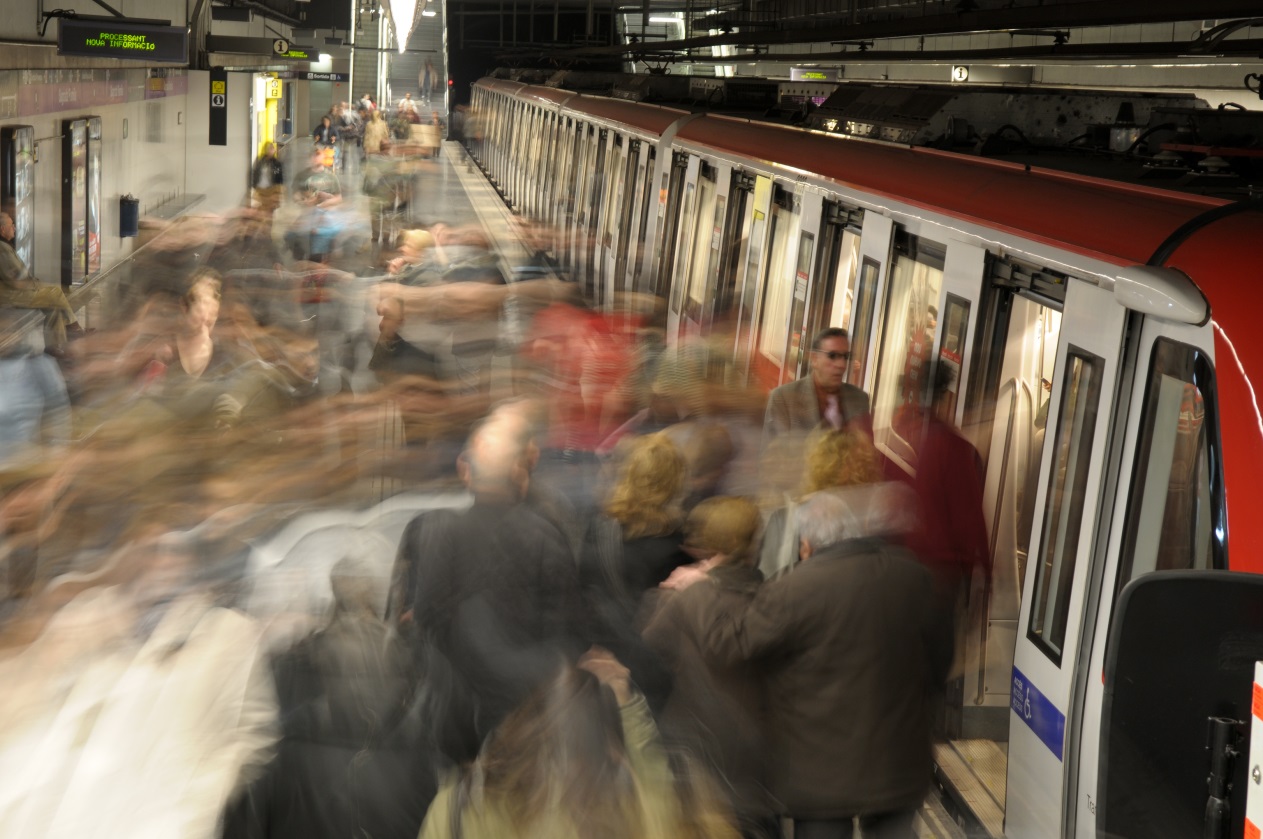
In the context of air pollution, commuting through the city, whether by private or public transport, or simply walking alongside busy roads, frequently exposes individuals to poor air quality, particularly with respect to the inhalation of particulate matter (PM) suspended in the atmosphere. In order to try and reduce air pollution produced by road traffic, all air quality plans in European cities incentivise the use of public transport as an effective tool for the abatement of atmospheric emissions from the tráffic sector in urban agglomerations (Nagl et al., 2007). In particular, underground rail metro systems are considered to be one of the most environmentally ‘clean’ and efficient forms of urban public transport. In Europe alone, more than 60 cities utilise rail subways to facilitate commuter movement. The general evaluation of subway systems as environmentally desirable is due to the following: a) the system is usually based on electric trains (with low direct emissions); b) it is energetically and environmentally efficient as it transports a large number of passengers (around 7 million passengers/day in the case of Tokyo, 3 million in London); and c) underground transport favours a more fluid traffic on the surface, with correspondingly less road congestion.
The question remains, however, as to how good is the air quality below ground on the rail platforms and inside trains? Over the last decade several pioneering studies have monitored subway air quality across a range of cities in Eurasia and the Americas, but thus far the growing database, although obviously valuable and full of good work, remains piecemeal in character. Physical measurements frequently consider only one aerosol size fraction, sampling campaigns may be limited in time and place, and chemical analyses are usually partial and/or small in number. Interestingly, some subway systems appear to be worse than others in terms of PM loading. High levels, for example, have been reported underground in Berlin, London, Stockholm, Prague, Rome, Beijing, Budapest, Seoul, Paris and Shanghai (Fromme et al.,1998; Adams et al., 2001; Johansson and Johansson, 2003; Seaton et al., 2005; Branis, 2006; Ripanucci et al., 2006; Li et al., 2007; Salma et al., 2007; Kim et al., 2008; Park and Ha, 2008; Raut et al., 2009; Ye et al., 2010), whereas less contamination was measured in the subways of Tokyo, Taipei, Helsinki, Mexico, Hong Kong, Guanzhou, Los Angeles and New York (Furuya et al., 2001; Chan et al., 2002; Chillrud et al., 2004; Aarnio et al., 2005; Gómez-Perales et al., 2004; Cheng et al., 2008; Cheng and Yan, 2011; Mugica-Álvarez et al., 2011; Kam et al., 2011). Such differences have been attributed to different wheel materials and braking mechanisms, as well as to variations in ventilation and air conditioning systems (Nieuwenhuijsen et al., 2007), but may also relate to differences in measurement campaign protocols and choice of sampling sites.