

 EN
EN ES
ES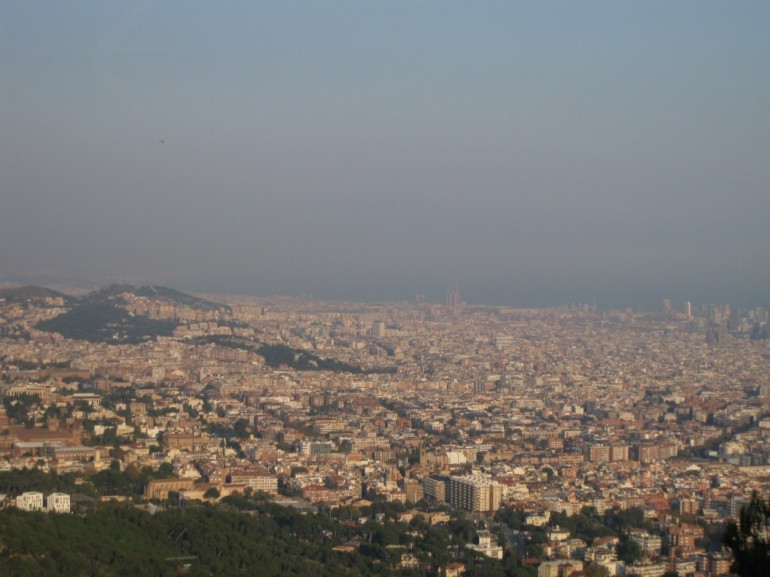
Air is essential for life. The oxygen in it allows us to respire and demands that we spend our lives in obligatory continuous consumption of air with every breath we take. It also allows us to burn fuels to cook food and power our industries and transport systems. Unfortunately, combustion of such fuels and the resulting pollutant emissions from industry and transport damage air quality, so that none of us breathe pure air any more. Instead the atmosphere contains invisible but inhalable contaminating gases and particles that present a threat to our good health, especially for individuals with respiratory (such as asthma) and cardio-vascular (such as heart) conditions. This is especially true in our cities, where a majority of humans now live.
 Another unwelcome effect of air pollution produced by humans (that is, “anthropogenic” contamination) is that it affects climate. The exact future outcomes of anthropogenic climate change are still unknown, but it is clear that greenhouse gas concentrations (most notably CO2) have risen dramatically, along with the near-tripling of the human population, since the mid-20th century. We know by now that is would be wise to understand, control, and reduce our atmospheric pollutant emissions in order to lessen the risk of catastrophic climate change.
There are a number of air pollutants with different impacts on the atmosphere and our health. The gases include carbon dioxide (CO2), carbon monoxide (CO), sulphur dioxide (SO2), nitrogen oxides (NO and NO2), ozone (O3), ammonia (NH3), and hydrogen sulphide (H2S). The solid particulate matter (referred to in brief as “PM”) present in the atmosphere is a mixture of materials coming from a wide variety of both natural and anthropogenic sources. These sources include soil minerals resuspended by wind and transport vehicles, dust released by construction activities, residential heating and industrial chimney smoke, and road-vehicle exhaust pipe, tyre wear and brake pad emissions. Indeed, in our century it is traffic that is inflicting the most obvious damage to air quality in the city, especially at busy “hotspots” but also spreading pervasively throughout the urban atmosphere. Wherever we live and travel in the city we cannot escape inhaling traffic pollution, but we can help reduce it by making lifestyle choices such as using other forms of transport.
Adapted in part from Querol X., Viana M., Moreno T., Alastuey A, Pey J., Amato F., Pandolfi M., Minguillón M.C., Reche C., Pérez, N., González A., Pallarés M., Moral A., Monfort E., Escrig A., Cristóbal A., Hernández I., Miró J.V., Jiménez S., Reina F., Jabato R., Ballester F., Boldo E., Bellido J. Scientific bases for a National Air Quality Plan (In Spanish). Colección Informes CSIC, 3, 2012, ISBN 978-84-00-09475-1, 349 pp.